







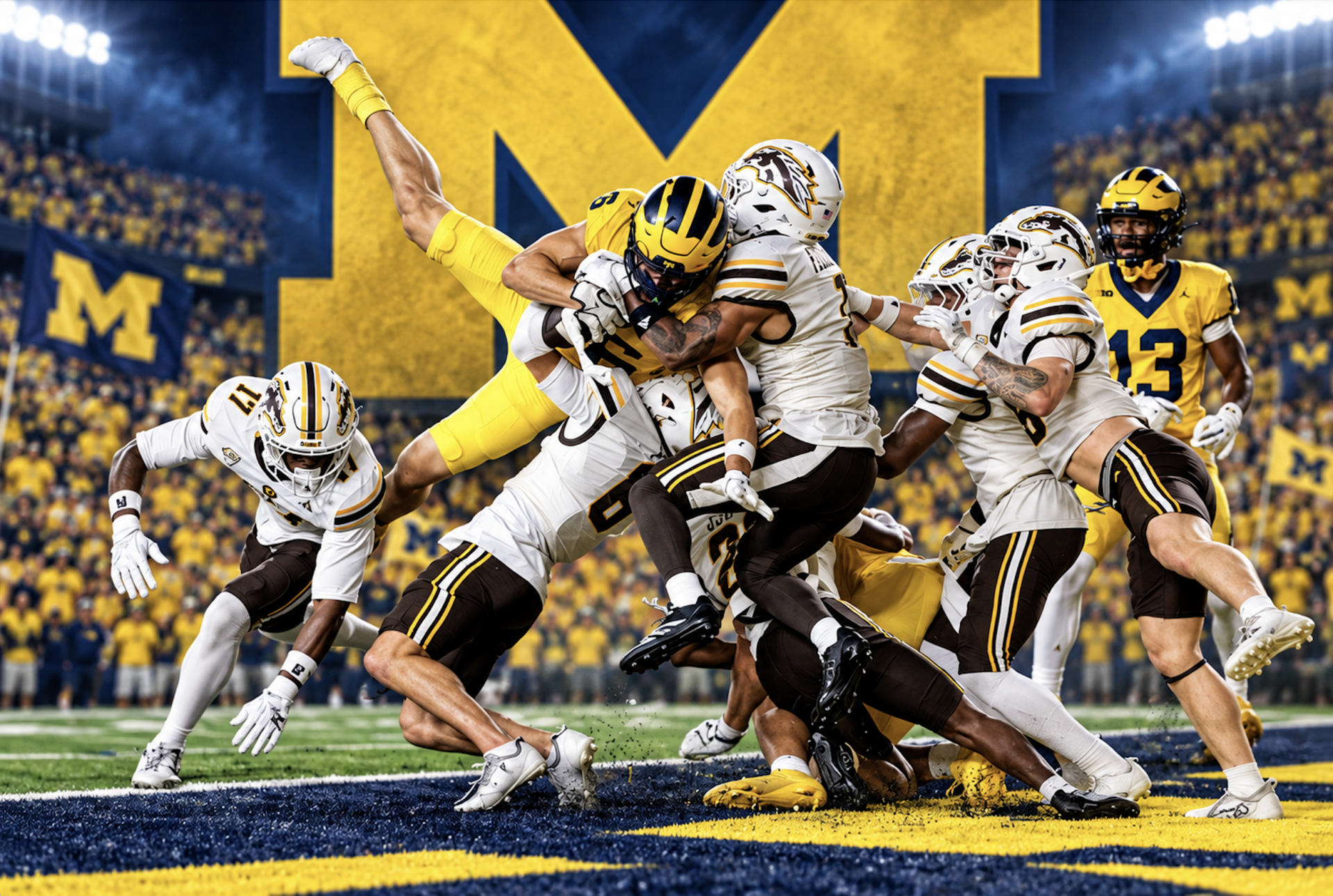


The Big Ten has explained why Michigan received the extra second that ultimately saved its season opener against Western Michigan.
After Bryce Underwood’s first Hail Mary attempt appeared to end the game, replay officials determined that Western Michigan safety Micah Davis had established himself out of bounds before touching the football with one second remaining. Because NCAA rules declare a loose ball out of bounds as soon as it touches a player who is out of bounds, the clock should have stopped at that point.

“Following video review, it was determined Western Michigan’s #18 started his jump from an established out-of-bounds position (left foot) and made contact with the ball with one second remaining on the clock. As shown in the provided video of what was viewed during the replay process, a side-by-side view of the play and the game clock, using a direct shot of the game clock in the stadium, was used to determine the final ruling,” the Big Ten said in a statement.

“Eighty-five minutes prior to the game, all broadcast cameras used for the replay system, including the camera on the game clock, are synced using a strobe system to ensure all cameras are aligned,” it added.
The controversy came from what television viewers saw. NBC’s on-screen clock appeared to reach 0:00 while the football was still in the air. According to the Big Ten, replay officials instead used a direct shot of the Michigan Stadium game clock synchronized with the replay video. The conference said all replay-system cameras, including the camera focused on the clock, were synchronized 85 minutes before kickoff using a strobe system.
That one second changed everything.
Underwood received another snap and found JJ Buchanan for a 47-yard touchdown, completing Michigan’s stunning 13-12 victory. We covered the incredible finish in our immediate Michigan-Western Michigan game story after entering the night with five major questions surrounding Michigan’s opener.
The broadcast replay created an understandable controversy. The Big Ten’s position is now straightforward: the synchronized stadium clock showed one second when Davis touched the ball, and NCAA rules required the clock to stop.
Michigan used every bit of it.

Recent Comments