









Brad Holmes built much of the Detroit Lions’ foundation through the draft. He also spent valuable picks on players who delivered very little.
Both belong on the report card.
After evaluating all 43 selections from 2021 through 2026, my overall grade for Holmes’ drafts is 2.9 out of 4.0. His first three classes average 3.7. The decline comes from a disappointing 2024 class, costly developmental misses and newer investments that still have plenty to prove.
This is an assessment of return relative to investment: production, availability, draft position and the additional capital surrendered to acquire a player.
The 2025 grades remain provisional. The 2026 grades are especially tentative after two games.
Holmes deserves enormous credit for finding Detroit’s stars. That credit should not make the rest of his record immune from examination.
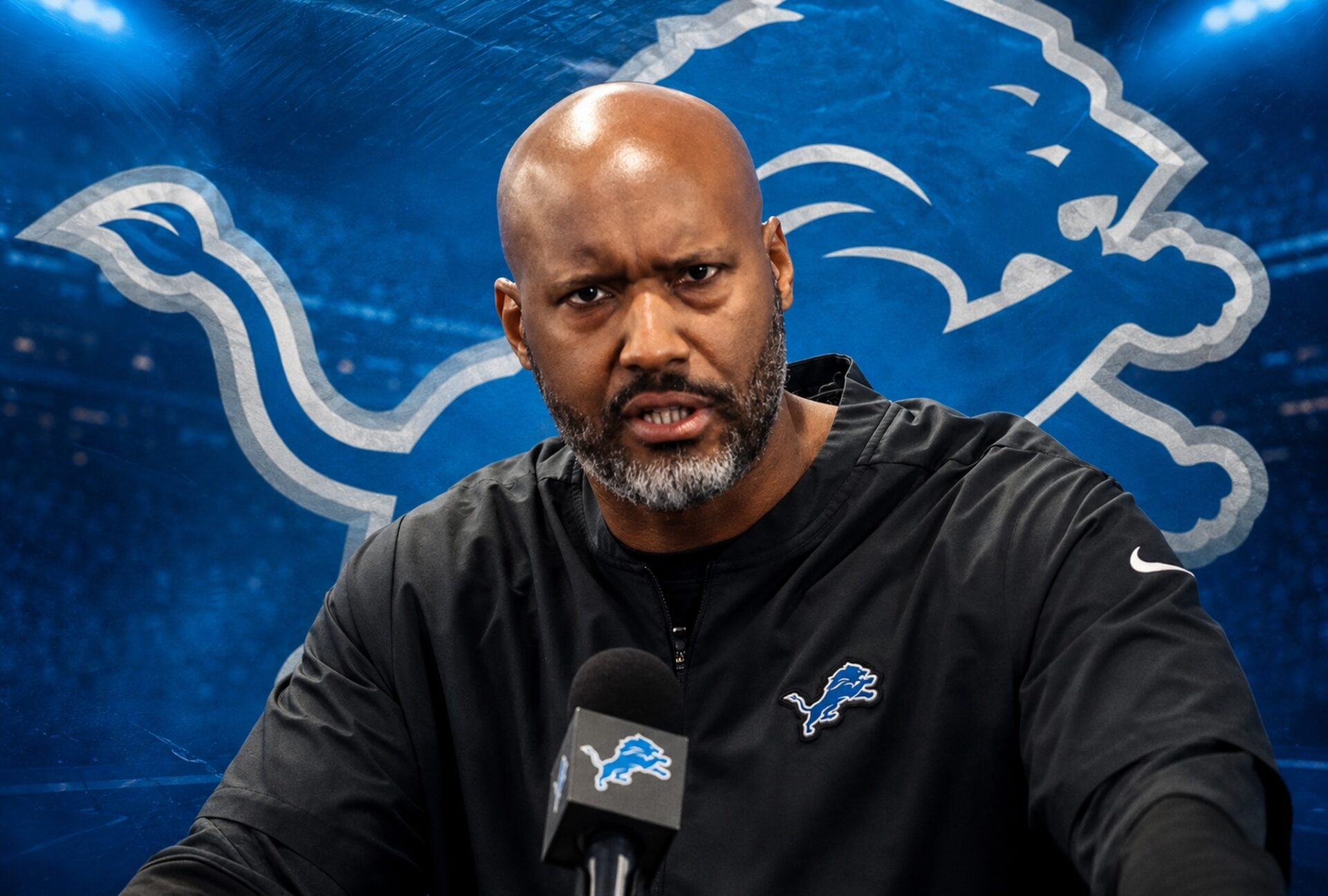
The first three classes changed Detroit
Start with the obvious: Penei Sewell and Amon-Ra St. Brown in the same draft is franchise-changing work.
Sewell justified the seventh overall selection in 2021. St. Brown, taken 112th, became the kind of fourth-round bargain every general manager hopes to find. Add Alim McNeill and Derrick Barnes, and that class supplied far more than two headline names.
The 2022 draft brought Aidan Hutchinson, Jameson Williams and Kerby Joseph, with useful later-round returns from Malcolm Rodriguez and James Houston.
Then came Jahmyr Gibbs, Jack Campbell, Sam LaPorta and Brian Branch in 2023.
That is a substantial collection of talent. It also explains why simply counting hits and misses produces a misleading evaluation. A seventh-round selection who never develops does not cancel out an elite tackle or receiver.
My grades reflect that distinction. The 2021 and 2023 classes each receive 3.8, while 2022 earns 3.5.
Conviction gets expensive when the projection fails
Holmes’ willingness to move for a player has helped Detroit. Barnes and Branch are examples of that approach producing results.
Brodric Martin illustrates the other side.
Detroit surrendered picks 122, 139 and 168 to acquire No. 96 and select Martin. He supplied little playing time before being cut in 2025.
That was three opportunities consolidated into one unsuccessful projection.
Giovanni Manu presents a different, still-developing case. Detroit used a future third-round pick to acquire the fourth-round selection spent on him. His developmental timeline was always going to require patience, but patience does not erase the price.
A project acquired with a late pick can be a reasonable gamble. Paying extra for that project raises the standard.
That is the recurring concern in this audit: Holmes’ confidence sometimes costs Detroit more than the eventual contribution justifies. The player’s potential matters. So do the other opportunities surrendered to obtain him.
The 2024 class is the biggest drag
My 1.0 grade for 2024 reflects poor returns from the class’s largest investments.
Terrion Arnold’s selection did not produce a lasting roster asset. Ennis Rakestraw Jr. had delivered little through the opening two games of 2026. Manu remained a projection with limited playing experience.
Christian Mahogany offers the strongest value as a sixth-round selection who worked into a starting role. Sione Vaki has contributed on special teams, though his offensive role remains limited.
There is useful work in that class. There simply has not been enough of it to offset the higher-cost disappointments.
Injuries complicate the evaluation. They can explain why an investment underperformed without making the return satisfactory.
Detroit’s current circumstances make that distinction particularly relevant. With Branch and Joseph unavailable to begin the season, the defense needs its other investments to provide dependable support. The value of depth becomes much clearer when the starters cannot play.
The newer classes still have time to change this
Tate Ratledge supplies the clearest early success from 2025 after starting all 17 games as a rookie. Tyleik Williams and Isaac TeSlaa remain important unresolved evaluations.
TeSlaa’s price deserves accurate accounting. Detroit sent a 2025 third-round pick and two 2026 thirds to Jacksonville, receiving the selection used on TeSlaa and two sixth-round picks.
The returned selections count. So does the burden created by giving up two future thirds.
The 2026 class emphasizes offensive tackle and defensive help, led by Blake Miller and Derrick Moore. Those priorities are reasonable. Whether the players justify the investments will take considerably longer to establish.
Detroit’s Week 2 lineup changes after Miller’s injury demonstrate how quickly rookies can become important to a roster. They do not tell us what Miller’s career will become.
Two games are enough to observe a role. They are nowhere near enough to deliver a final verdict.
How the six draft classes grade out
These are holistic class grades, weighted within each class toward the most consequential investments and contributions.
| Draft class | Selections | Grade |
|---|---|---|
| 2021 | 7 | 3.8/4.0 |
| 2022 | 8 | 3.5/4.0 |
| 2023 | 8 | 3.8/4.0 |
| 2024 | 6 | 1.0/4.0 |
| 2025 | 7 | 2.4/4.0 — provisional |
| 2026 | 7 | 2.7/4.0 — highly provisional |
| Overall | 43 | 2.9/4.0 |
The overall score is the equally weighted average of those six class grades, rounded to one decimal place. Excluding the barely tested 2026 class still produces a rounded 2.9.
That methodology has limits. A mature class provides much stronger evidence than one entering its second season. The newer grades should move as the players establish themselves.
The central finding is clearer than any decimal: Holmes drafted an exceptional core, but the subsequent replenishment has been less convincing.
Detroit needs more recent picks to become dependable contributors. The stars Holmes found cannot fill every remaining hole.
