










The Detroit Lions know Josh Allen is the obvious problem Thursday night.
Dan Campbell has identified another one hiding inside Buffalo’s personnel packages.
The Bills used 13 personnel, one running back and three tight ends, on 50 percent of their offensive snaps in their Week 1 victory over Houston. According to the Lions’ official Week 2 matchup coverage, no NFL team used the package more frequently during opening weekend.
And Buffalo is not simply putting three big bodies on the field to run the football.
Dalton Kincaid caught five passes for 130 yards against Houston. Dawson Knox can block, release or align away from the formation. Jackson Hawes gives Buffalo a more traditional blocking tight end.
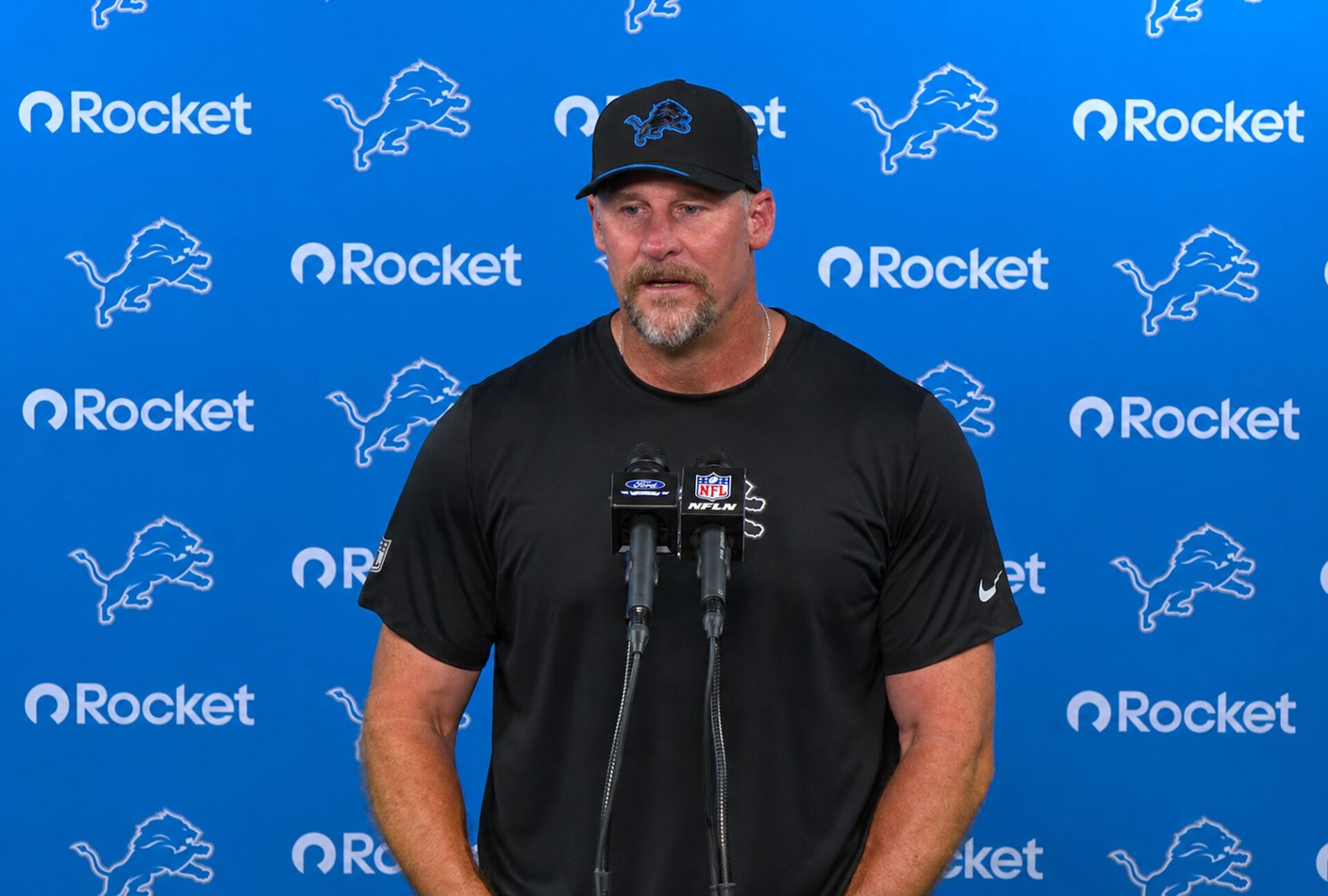
Campbell understands the problem.
“They have three tight ends. They have three real guys that have three different roles that they’re all three pretty good at.”
That versatility gives Detroit something else to solve besides Allen.
Buffalo Can Make Detroit Choose Its Problem
The challenge with 13 personnel is not merely defending three tight ends.
It is determining what Buffalo intends to do with them.
With Hawes attached to the formation, Knox capable of handling multiple roles and Kincaid functioning more like a large receiving weapon, Buffalo can present the appearance of a power-running formation without committing to a power-running play.
That creates a personnel decision for Detroit.
Put bigger defenders on the field and Buffalo can spread Kincaid out, force a linebacker or safety into coverage and let Allen hunt a favorable matchup.
Stay lighter with nickel personnel and the Bills can compress the formation and attack the run.
Pride of Detroit’s Week 1 film review highlighted precisely how much stress Kincaid can create after his breakout opener.
That is what makes the package dangerous. Detroit cannot identify the play simply by identifying the personnel.
Dalton Kincaid Makes 13 Personnel More Dangerous
Kincaid provided the evidence Sunday.
He finished with five receptions for 130 yards, averaging 26 yards per catch. Buffalo’s official statistics show that three of those receptions gained at least 20 yards, including a 40-yarder.
Those were not empty yards, either.
Kincaid produced receptions of 38, 40 and 35 yards on three separate Buffalo scoring drives. His 130 yards were the most by a Bills tight end in a game since 1967.
That is a significant concern for a Detroit defense that already had problems preventing explosive passes in Week 1.
New Orleans quarterback Tyler Shough threw for 410 yards in Detroit’s overtime victory, while Chris Olave finished with 182 receiving yards. We examined those problems after Campbell addressed the Lions’ secondary following the opener.
Buffalo now presents a different version of the same test.
Except this one can arrive from a three-tight-end formation.
Josh Allen Makes the Numbers Even Harder
Detroit cannot devote all its attention to Kincaid.
That is where Allen changes the equation.
Load the box aggressively to stop Buffalo’s heavier formations and Allen can attack downfield. Spread defenders out to handle Kincaid and Knox, and Detroit still has to account for Allen as a runner.
Then there is James Cook III.
Buffalo rushed for 197 yards in the last meeting between these teams in 2024, and Allen’s ability to create with his legs makes every run fit more complicated. Detroit’s defense cannot simply remove a defender from the box to chase Kincaid without understanding what it potentially gives away elsewhere.
That makes Thursday a significant assignment for Kelvin Sheppard’s defense, particularly after an uneven opening performance. The Lions still escaped New Orleans with a 31-30 overtime victory, but the secondary allowed too many explosive plays along the way.
Buffalo will have noticed.
Detroit Needs Versatility of Its Own
This is also where Christian Izien’s potential return becomes important.
Izien can play in the slot and at safety, giving Detroit another defender capable of handling different assignments without forcing the Lions to constantly substitute. Detroit nearly played him in Week 1 before holding him out with a groin injury, and he has progressed toward a possible Thursday debut.
That type of versatility matters against an offense designed to disguise its intentions.
Buffalo can break the huddle with three tight ends and still make Detroit defend the entire field. It can run directly at a lighter defensive package or force larger personnel to cover Kincaid in space.
Campbell knows exactly what the Lions are dealing with.
Buffalo does not need to change personnel to change the question.
Detroit needs to have more than one answer.
