








The Detroit Red Wings were reportedly willing to discuss a Dylan Larkin trade, but only if the return helped them immediately.
That is a significant condition. It may also help explain why Larkin remains in Detroit months after reportedly requesting a trade.
Citing comments made by NHL insider Elliotte Friedman on the 32 Thoughts podcast, Octopus Thrower reported that the Red Wings were not interested in moving Larkin for a package built primarily around future assets.
“The Red Wings were not willing to make a Larkin deal that wasn’t for immediate help,” Friedman said. “Yzerman had warned the Red Wings and ownership that if they traded Larkin, they probably would not win the deal in the short term. It would be for more longer-term help. And I don’t think the Red Wings liked that.”
That does not establish that Detroit had a completed trade that ownership vetoed. It does suggest that the organization’s preferred return substantially narrowed the market.
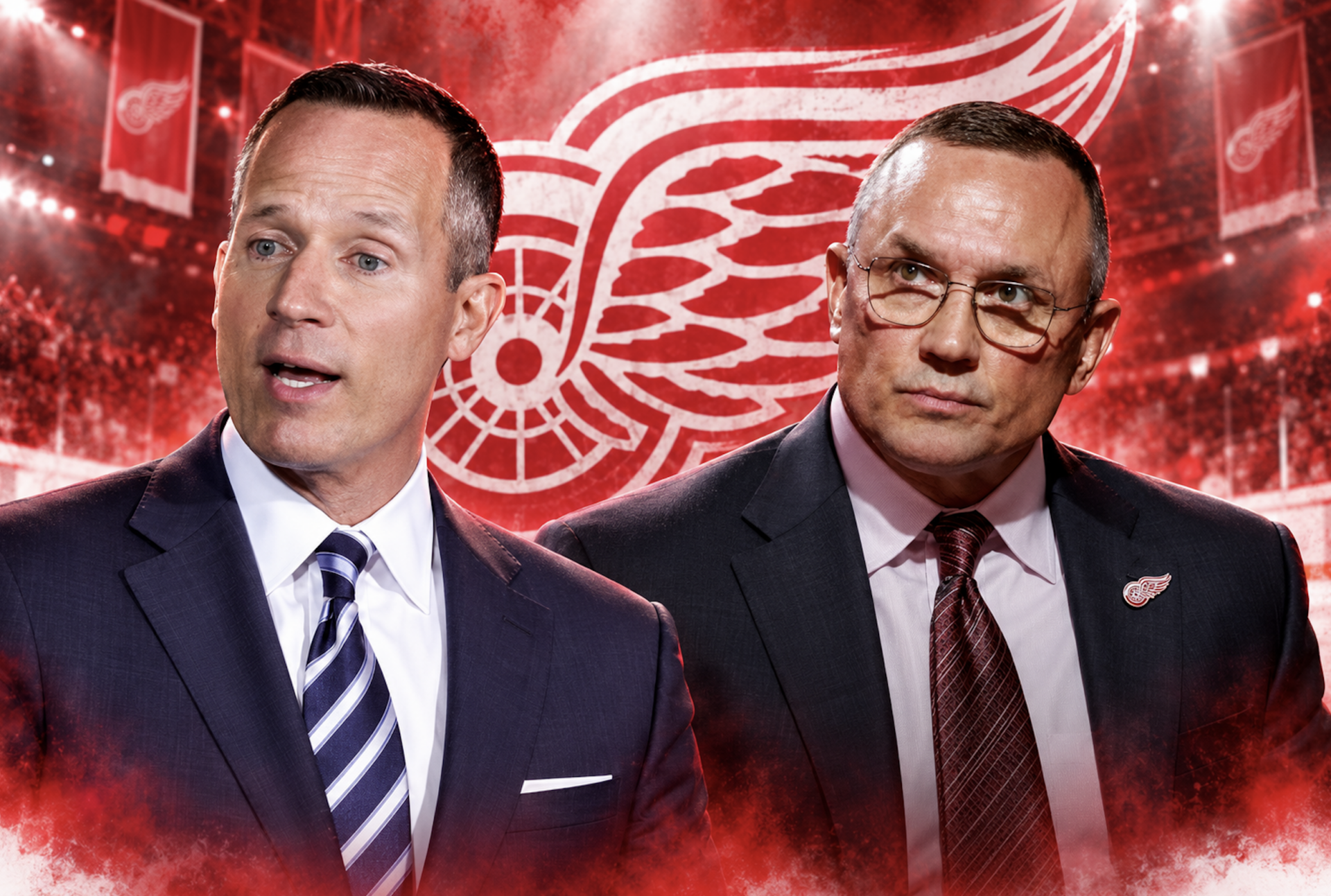
Detroit’s Condition Creates a Difficult Trade
The problem is straightforward: Teams most interested in acquiring Larkin would probably view him as a piece capable of helping them win now.
Those teams generally do not want to send immediate NHL help in the other direction. Contenders like adding good players. They tend to be less enthusiastic about mailing equally useful ones back to Detroit.
Draft picks and prospects are easier for an acquiring team to surrender because they do not weaken its current lineup. Yet those are precisely the assets that would carry more long-term value than immediate impact.
Detroit apparently wanted to avoid taking that route.
The reasoning is understandable. The Red Wings have missed the playoffs for years, and interim general manager Shawn Horcoff has publicly said another rebuild is “out of the question.” Trading the team’s top center for futures would make the current roster worse, at least temporarily, while also creating an enormous hole down the middle.
Understanding the condition, however, does not make it easier to satisfy.
Yzerman Warned Chris Ilitch About Larkin Trade
The most revealing portion of Friedman’s report involves former general manager Steve Yzerman.
According to Friedman, Yzerman cautioned Detroit and ownership that the Red Wings probably would not win a Larkin trade in the short term. Any worthwhile return would more likely be designed to benefit the organization later.
That warning reflects the reality of dealing a proven center who reportedly asked to leave. Once other teams know a player wants a trade, they have little reason to overpay. Detroit could wait for a stronger offer, but interested clubs could also wait for the pressure on the Red Wings to increase.
That leaves the organization trying to accomplish three difficult things at once: honor or address Larkin’s request, avoid weakening the current lineup and receive fair long-term value.
Perhaps Horcoff can find that trade. Perhaps he can also locate a top-six center who is younger, cheaper and immediately available while he is at it. General managers dream too.
For now, Horcoff continues to keep the status of Larkin’s reported trade request private.
The Ownership Question Remains Unanswered
The report will inevitably raise more questions about ownership’s involvement, especially after Chris Ilitch said Detroit’s hockey leadership has been given the authority to make roster decisions.
Still, Friedman’s quoted comments should be handled carefully. He said “the Red Wings” were unwilling to make a deal without immediate help and that Yzerman warned “the Red Wings and ownership” about the likely return.
That is not the same as identifying a specific offer that Yzerman accepted before Ilitch rejected it. Without the details of an actual proposal, declaring that ownership personally killed a completed trade would go beyond the available reporting.
What the report does reveal is a potential philosophical divide. Yzerman reportedly saw a Larkin trade as a longer-term transaction. The organization wanted a return that could help immediately.
Detroit has since removed Yzerman as general manager and appointed Horcoff on an interim basis. Larkin remains with the team, though neither he nor Horcoff has publicly confirmed whether the trade request still stands.
Horcoff Inherits the Same Problem
Detroit’s dilemma has not disappeared with the front-office change.
If the Red Wings still insist upon immediate NHL help, Horcoff’s list of viable trade partners will remain small. Any team willing to acquire Larkin must possess a player Detroit wants, be willing to surrender that player and still believe adding Larkin makes it better.
That is a tight needle to thread.
Keeping Larkin is preferable to accepting a poor return simply to end an uncomfortable situation. But if Detroit sets conditions no interested team can realistically meet, it risks allowing the situation to linger indefinitely.
The reported stance may protect the Red Wings from a short-term step backward. It may also prevent them from completing the deal Larkin reportedly requested.
That is not necessarily ownership interference. It is unquestionably a major restriction, and Horcoff is now responsible for determining whether there is any deal capable of surviving it.
