










The Detroit Pistons made a massive commitment to Ausar Thompson this offseason. On Monday, Trajan Langdon explained why.
Speaking at Pistons Media Day, Detroit’s president of basketball operations praised Thompson’s approach after the 23-year-old agreed to a five-year, $155 million contract extension that will keep one of the NBA’s premier young defenders in Detroit for the foreseeable future. The extension is fully guaranteed and begins with the 2027-28 season.
For Langdon, the investment isn’t simply about what Thompson already is. It’s about what the Pistons believe he’s going to become.
“He’s a young man and player that you want in terms of, he’s going to bring it every day, he’s going to compete every day, he’s going to work his butt off and he’s going to reach his potential. We’re very happy and excited to get an extension done.”
That’s quite an endorsement. It’s also easy to understand why Detroit was willing to make the commitment.
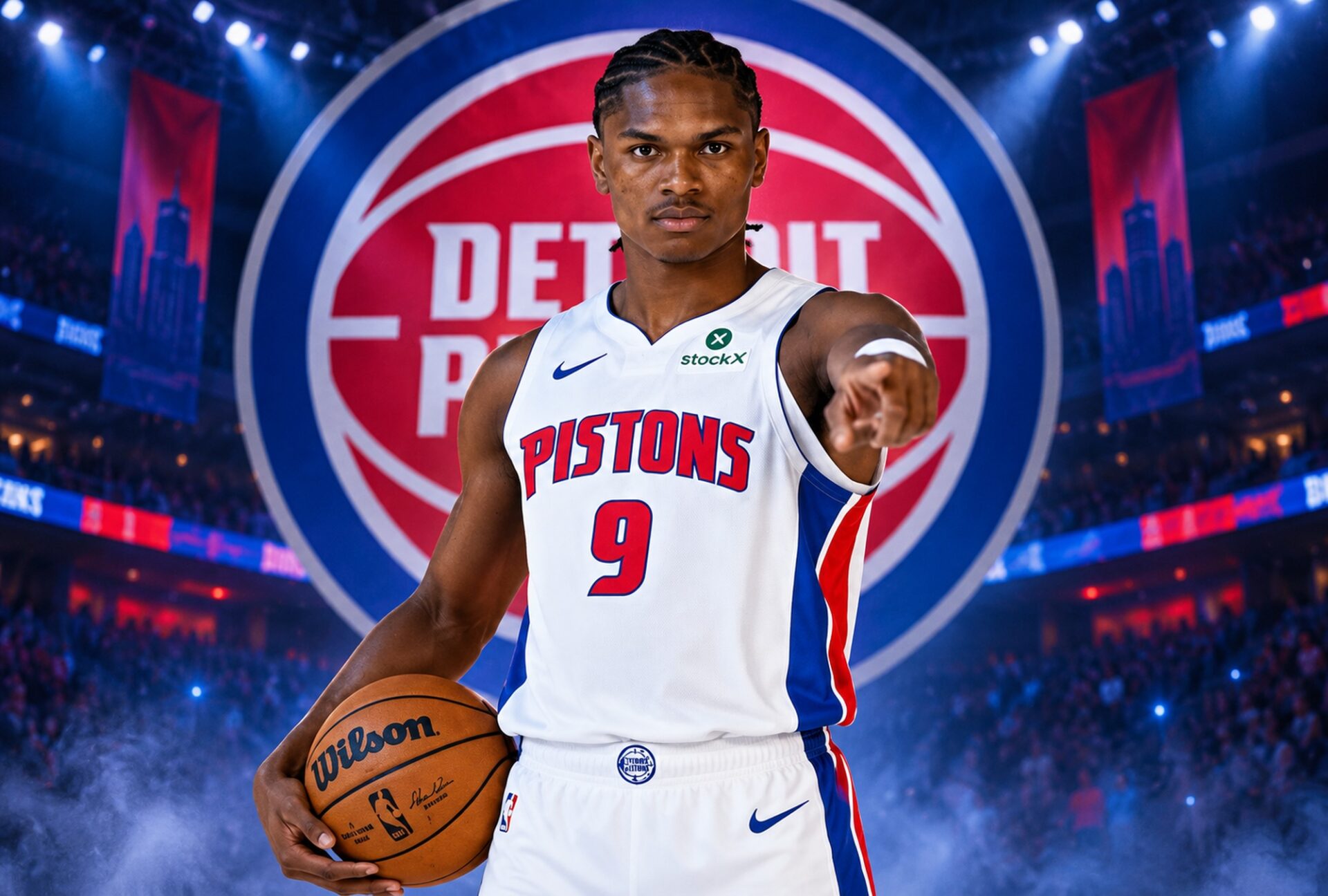
Ausar Thompson Has Become an Elite Defender
Thompson took another significant step during the 2025-26 season, averaging 9.9 points, 5.7 rebounds, 3.1 assists, 2.0 steals and 0.9 blocks while shooting 52.5% from the field in 73 games.
His impact went well beyond the traditional box score.
Thompson earned NBA All-Defensive First Team honors and finished third in Defensive Player of the Year voting, establishing himself as one of the league’s most disruptive perimeter defenders. He became the first Pistons player to make the All-Defensive First Team since Ben Wallace in 2005-06.
Detroit has been talking about Thompson’s upside for months. Langdon said earlier this offseason that Thompson had taken a “huge step” and praised the work he was putting into his offensive development.
Now the Pistons have backed those words with $155 million.
Pistons Betting Thompson Has Another Level
The most intriguing part of Langdon’s Media Day comments was his confidence that Thompson will eventually reach his ceiling.
Defense has never been the question. Thompson’s ability to defend multiple positions, create turnovers, rebound and generate offense in transition already makes him an unusual player.
The next step remains obvious.
Thompson attempted only 0.3 3-pointers per game last season and shot 25% from beyond the arc. He also made 57.1% of his free throws. If his shooting develops enough that defenses have to respect him away from the basket, his offensive possibilities change considerably.
Detroit doesn’t need Thompson to become a 25-point scorer. With Cade Cunningham directing the offense, Thompson can provide enormous value by defending the opponent’s best perimeter player, creating havoc and becoming a more reliable complementary offensive threat.
The Pistons just made a nine-figure bet that there’s more coming.
And based on Langdon’s comments Monday, Detroit isn’t worried about whether Thompson will put in the work required to find it.
