










Urban Meyer knows a little something about what elite athletes look like.
That makes his assessment of Michigan quarterback Bryce Underwood particularly interesting, especially considering Meyer spent seven seasons coaching Ohio State.
While reviewing Michigan’s 17-10 victory over Oklahoma on The Triple Option, Meyer stopped on one play: Underwood’s 38-yard touchdown run late in the first quarter. The former Buckeyes coach watched Underwood get outside, accelerate and simply run away from Oklahoma’s secondary.
Meyer paused the film and asked a pretty simple question.
“How many men in the game can do this?”
His answer was essentially one.
“He outran an SEC secondary for a touchdown,” Meyer said during the discussion of Michigan and Underwood. Meyer’s larger point was that Underwood possesses a physical trait Michigan simply cannot manufacture with another quarterback.
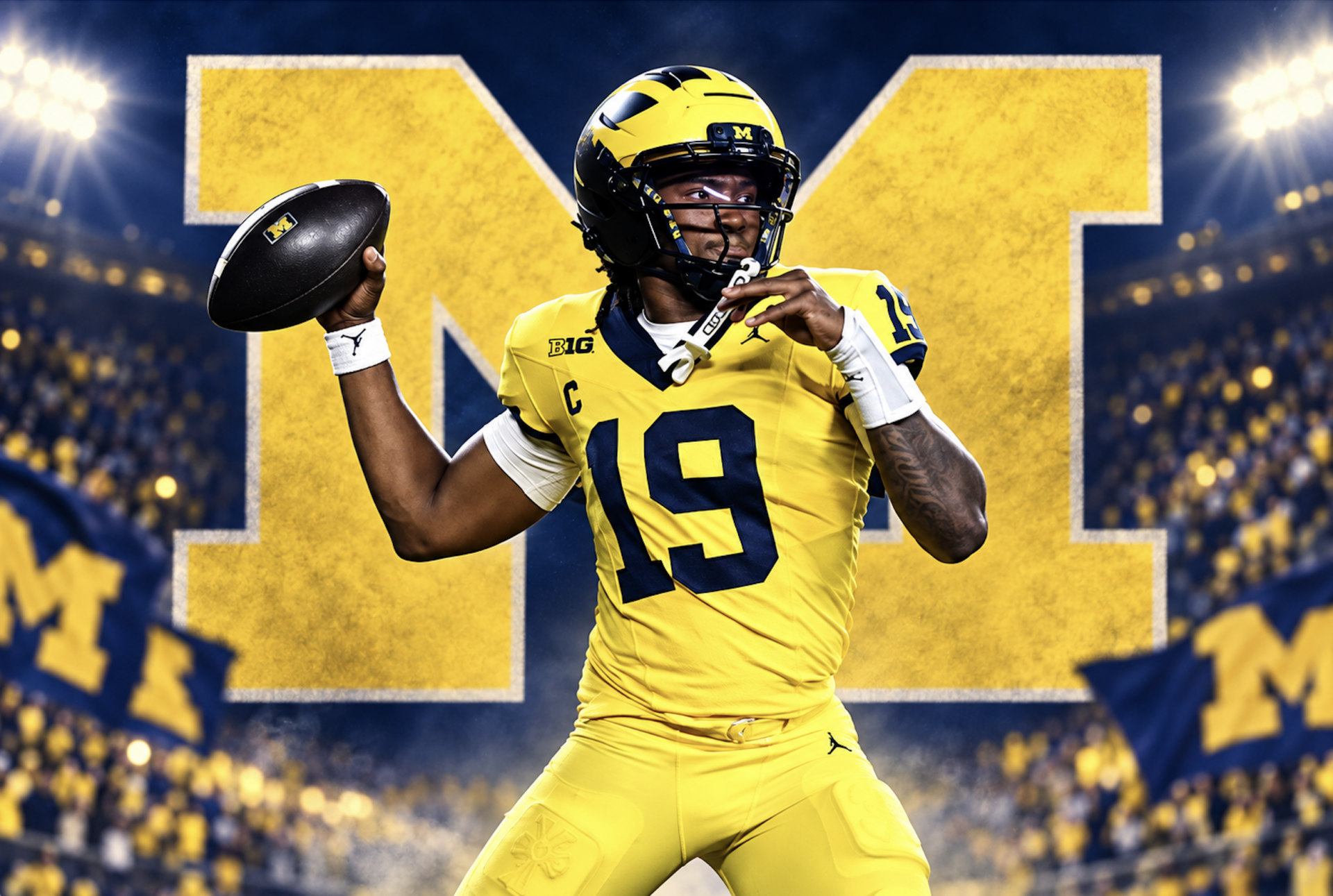
Underwood Showed Meyer Something Rare
This is where the conversation around Underwood occasionally gets sideways.
Michigan absolutely needs him to become a better passer. Nobody, including Kyle Whittingham, is pretending 9-of-17 for 111 yards represents the finished version of the Wolverines’ offense. We already saw Whittingham make clear that Michigan still wants considerably more from its passing game.
But development as a passer and rare athletic ability are not mutually exclusive.
Underwood’s touchdown against Oklahoma was a good example. Michigan officially credited him with a career-long 38-yard run, surpassing his previous best of 33 yards. He finished the afternoon with 87 rushing yards on 18 carries and led Michigan in rushing. Michigan’s official postgame notes confirmed the run was Underwood’s longest as a Wolverine.
That wasn’t a quarterback slipping through a crease and stealing eight yards.
Underwood is listed at 6-foot-4 and more than 220 pounds, yet once he reached open field, Oklahoma defensive backs could not run him down.
That combination is what caught Meyer’s attention.
Michigan Has to Build Around What Underwood Already Does
There is a reasonable argument that Michigan’s biggest mistake in the opener against Western Michigan was asking Underwood to play too conventional a game.
Against Oklahoma, offensive coordinator Jason Beck adjusted.
Michigan moved Underwood, incorporated designed runs and gave the Sooners another problem to solve. Underwood responded with 198 total yards, no turnovers and the Wolverines’ most explosive scoring play. Afterward, he credited his Michigan teammates for holding him accountable during the week.
Meyer also praised the way Michigan simplified portions of the passing game, using half-field reads and isolation concepts to help Underwood play faster. His conclusion was not that Underwood is already an elite college quarterback. It was that his physical upside makes continued investment in his development worthwhile.
That’s the important distinction.
Underwood still has to improve his footwork, processing, accuracy and consistency. Michigan will eventually encounter an opponent that forces him to win repeatedly from the pocket.
But defenses also have to deal with something most quarterbacks cannot offer.
A 6-foot-4 quarterback who can turn a designed run into a 38-yard touchdown and outrun defensive backs changes the geometry of an offense.
It apparently made enough of an impression that even a former Ohio State coach stopped the film.
