
Sometimes the best trades aren’t the loudest ones; they’re the smart, disciplined moves that quietly push a team forward.
That’s exactly what the Detroit Lions accomplished by trading David Montgomery in exchange for a fourth-round pick, a seventh-round pick, and offensive lineman Juice Scruggs.
The Context Matters
Let’s start here: Montgomery is a 28-year-old running back, a position the NFL has consistently devalued, especially for veterans on second contracts. Add in the fact that Jahmyr Gibbs has clearly become the focal point of the offense, and Montgomery’s role, while still valuable, was not enough to keep him happy. Because of that, the Lions decided to make Montgomery happy.
Before the trade, expectations around the league were modest. Realistically, the Lions were never going to get more than a fifth-round pick for Montgomery. Anything beyond that would’ve been a surprise.
They didn’t overplay their hand. They didn’t wait too long. They moved at exactly the right time.
Why the Lions Deserve an A
This trade earns an A grade for several key reasons:
- Maximized value for a veteran RB in a shrinking market
- Cleared cap space for a team already managing tight finances
- Fully committed to Jahmyr Gibbs as the offensive centerpiece
- Avoided paying premium money for declining positional value
Detroit turned a back who was trending toward a reduced role into draft capital, without weakening the core of the roster.
That’s roster management done right.
Timing Was Perfect
The Lions also deserve credit for timing. Montgomery had just publicly pushed back on reports that he “wanted out,” but the reality is clear: the writing was on the wall. His workload was shrinking, and he wanted to go somewhere where he would get more touches.
Moving him now avoids:
- A potential dead-cap headache later
- Diminishing trade value
- An awkward role split moving forward
This wasn’t reactionary. It was proactive.
Respecting What Montgomery Gave Detroit
None of this diminishes what Montgomery meant to the Lions.
He was tough, reliable, physical, and a tone-setter during Detroit’s rise. Teammates clearly respected him, as evidenced by the emotional reactions that followed the trade.
But the NFL is a business. And this was good business.
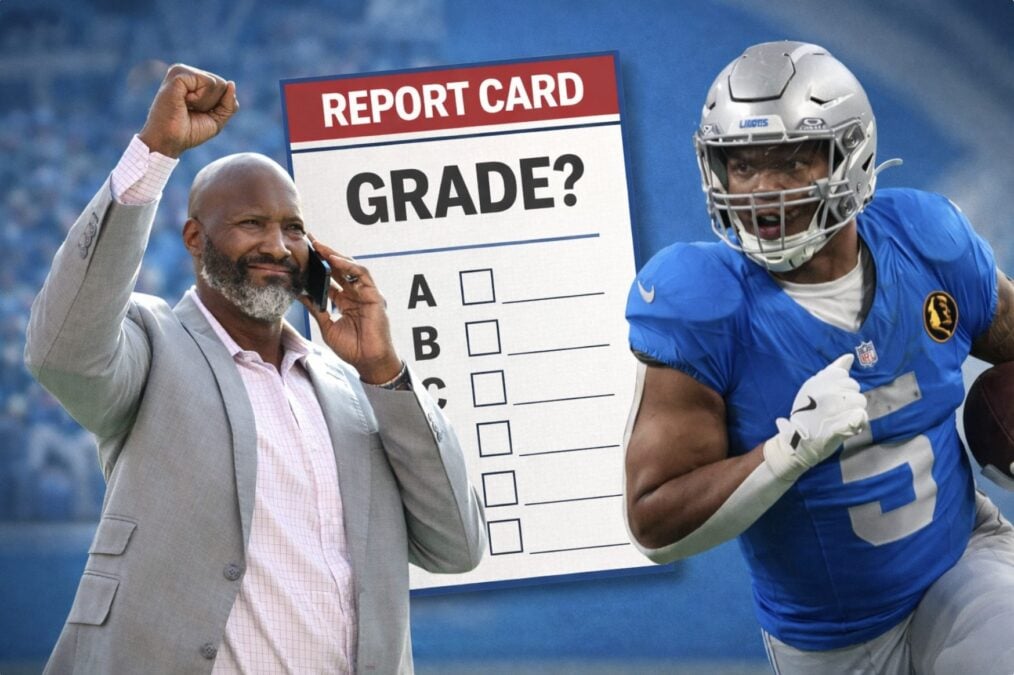
Final Grade: A
The Lions didn’t fleece anyone. They didn’t chase unrealistic value. They made a clear-eyed decision based on age, position, cap reality, and roster direction.
Considering the market, the role shift, and realistic expectations, getting the return they did is a big win.
Detroit stayed disciplined, and that’s exactly how contenders operate.
